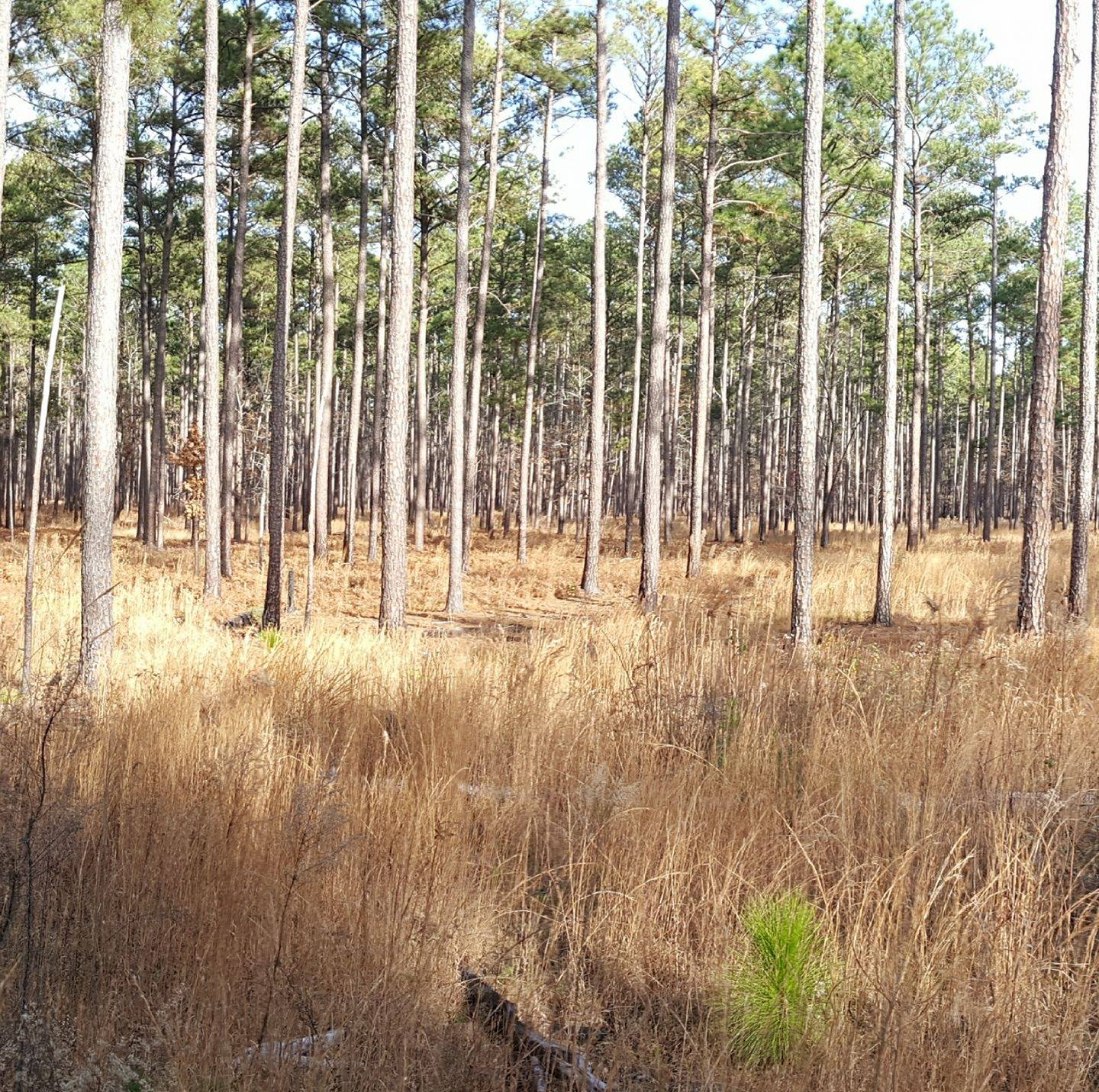
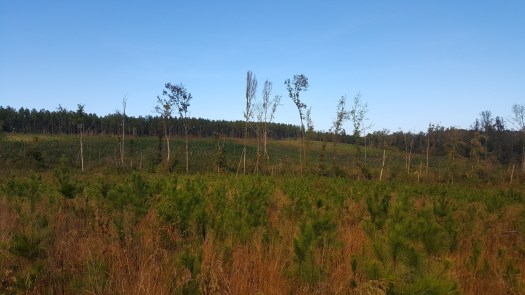
Reforestation is the beginning of a new generation of trees, and if done correctly, can greatly increase the value of your timberland for the years to come. There are two general methods of reforestation: artificial and natural regeneration. The method chosen depends on a variety of factors including landowner objectives, site conditions, and desired tree species to manage for.
The most common method of reforestation is artificial regeneration. This allows us to select the best species for the site, take advantage of genetically improved seedlings, and manipulate tree spacing to maximize the growth of the stand as a whole. Natural regeneration has it’s place, and is best used to regenerate hardwood stands in fertile soils such as bottom lands and moist, north facing slopes.
Site Preparation:
Site preparation is crucial to successful stand establishment. Site prep treatments take place after the harvest and before the trees are planted. The two most common methods used are herbicide treatments and prescribed burning. Site conditions will dictate what is needed. Only one method may be needed on certain sites, but a combination of a herbicide mixture, followed by a prescribed burn normally yields the best results. Mechanical methods such as drum chopping or bedding may be needed depending on the site.
Cost-share Assistance:
Most private landowners are eligible for cost-share assistance through Federal and State programs. These programs reimburse landowners by either a percentage of the total cost of reforestation (usually up to 40%) or by a set per acre rate. We handle all of this for our clients to ensure the appropriate steps are taken. These programs are not only subject to reforestation but are also great for timber and wildlife improvements such as pre-commercial thinning, understory burning, mid-rotation herbicide applications, invasive plant control, wildlife habitat improvements, and more.
 Red Hill Forestry, PLLC